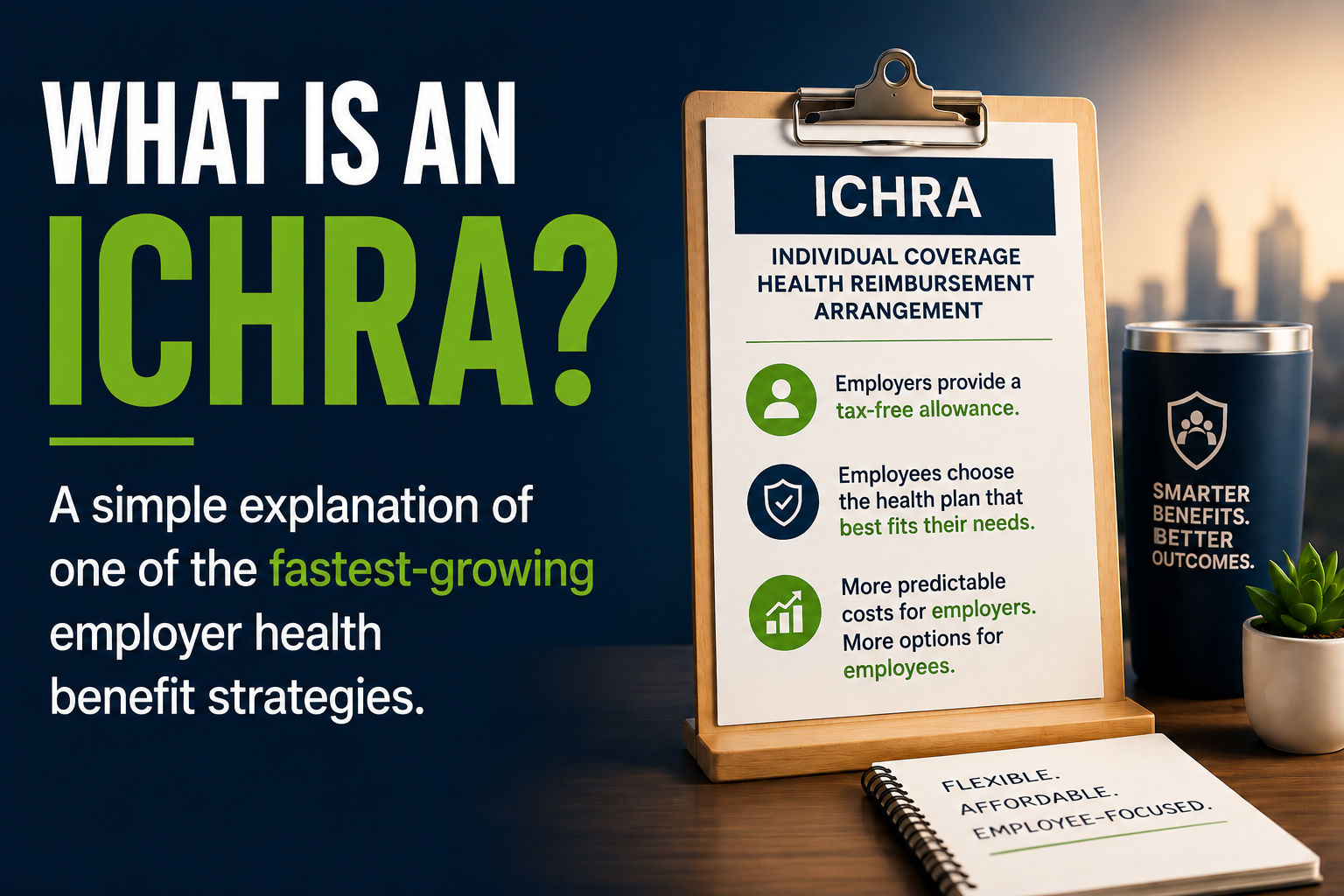
When employers first hear about an Individual Coverage Health Reimbursement Arrangement (ICHRA), it’s common to have questions—and sometimes misconceptions. Let’s take a closer look at five concerns I hear most often.
“ICHRA is only for large corporations.”
Not true. ICHRA can be used by employers of different sizes, including small and mid-sized organizations. The key is determining whether the strategy fits the employer’s goals and workforce.
“Employees won’t like it.”
Employees often value flexibility and having options that better fit their individual needs. With proper education and guidance, employees can better understand their choices and select coverage that works for them.
“The plans aren’t as good.”
ICHRA allows employees to choose individual health insurance coverage that meets their personal needs. The quality of coverage depends on the plans available in their market and the employee’s individual selection.
“ICHRA is too complicated.”
Like any new benefits strategy, ICHRA requires education and administration. However, with the right guidance and support, the process can be much easier for both employers and employees.
“ICHRA isn’t compliant.”
ICHRA is a federally established health benefit arrangement with specific rules and requirements. Employers must follow applicable regulations, but compliance is achievable with proper planning and administration.
The bottom line? ICHRA isn’t right for every employer. But when it’s the right fit, it can offer greater flexibility, predictable budgeting, and more personalized coverage options.
The key is not simply asking, “Should we use an ICHRA?” It’s asking, “Does an ICHRA make sense for our organization and our employees?”
View the full presentation on LinkedIn:
Rethinking Health Benefits – Part 9 of 10